If you want to learn how to fight, you have to fight.
At MINIMUM, you have to spar.
When sparring is taken out of training, you are no longer learning in a martial art – you are learning martially inspired performance art.
Lack of a sporting component in a style is a huge disadvantage.
Lack of sparring means a school will not produce capable students at all.
All martial arts self-optimise to improve performance under specific rule sets and conditions. If those conditions include fighting under certain rules, the art will continue to evolve toward improved performance under those rules – as long as practitioners are permitted to modify their methods in response to the lessons taken away post-fight/competition. If sparring and sport/fighting are removed, all that remains is opinion and aesthetic preference.
The style will evolve to better fit these preferences, and away from efficacy in a real fight. It will probably look good as a demonstration, otherwise can be practically useless.
That’s all you need to look for – sparring and competitive sports. If the school you’re looking at does not have these things, move on.
On October 30, Kevin Simensen, a 26-year-old man, was subjected to violence by the police. Initially, no one believed his account, but new surveillance footage has emerged that supports his claims.
The footage shows a police officer in his 30s repeatedly striking Simensen outside a gas station in Kongsberg. This video has gained significant attention recently. TV2 has also obtained another video that shows what happened immediately after the first surveillance footage. Simensen believes this second video was taken after he was pepper-sprayed and before his friend Kristian was hit with a baton.
Due to the surveillance footage, the case has taken a turn. The officer has been charged with violence and gross negligence in the line of duty. The police chief, Ole Sæverud, stated that the charged officer has not been in active duty since the video came to light.
Both Simensen and his friend Kristian Teigen appreciate the media attention the case is getting. They believe it’s crucial for people to realize that such incidents do happen in Norway. Teigen also mentioned that the police deleted some of the footage they had initially captured.
Simensen, who has been dealing with PTSD since the incident, is slowly reintegrating into society. He had previously served with NATO in the Mediterranean for six months.
The officer’s lawyer, Gry Schrøder Berger, stated that the video doesn’t show the entire sequence of events and that her client is currently struggling emotionally.
The Buskerud District Court ruled that the officer’s use of force against Kevin Simensen was lawful. The officer had been accused of gross bodily harm after forcibly restraining Simensen, who was pepper-sprayed and hit multiple times with both a baton and a fist.
The ruling was not unanimous; one of the judges dissented, arguing that the officer’s actions were not in line with the police law’s guidelines on the use of force. The court’s majority opinion emphasized that Simensen did not cease resisting arrest and that the officer had little time to consider alternative actions.
The Special Unit for Police Affairs, which had been prosecuting the case, stated that they would review the court’s reasoning before deciding on whether to appeal. Kevin Simensen and his legal team expressed disappointment with the verdict, stating that it could further erode public trust in the legal system.
Ole Sæverud, the Police Chief in Kongsberg, has not yet commented on whether the acquitted officer will return to duty. He mentioned that the officer is currently suspended and that they would need to thoroughly review the verdict before making any decisions.
00:05 – Intro 01:44 – Citizens arrest a man – what methods do they use? 02:21 – What are wrist locks and armbar takedowns? 03:36 – How do they differ from other methods? 04:10 – Arm drags are not equivalent to armbar takedowns 04:28 – Performance in combat sports 04:44 – So why do police train this way? 06:08 – Why do we teach police this way if it doesn’t work? 07:17 – Fighting is impossible to understand without doing it. 08:14 – Discussing examples 09:41 – Safety concerns 11:43 – Do wrist locks and armbar takedowns have any use at all? 12:41 – What should we teach instead?
Bystanders, brawls, and the court of public opinion
The narrative surrounding an event can often be as influential as the event itself. Public opinion and the perceptions of bystanders can significantly shape the narrative, even if they do not have full context or understanding of the situation.
This is particularly true for police, who in recent years have seen worsening results in the public discourse.
The “court of public opinion” is now increasingly magnified, where social media and online platforms can amplify and distort narratives. Our actions, especially in public situations, can have far-reaching consequences beyond the immediate confrontation; despite millions of interactions where nothing noteworthy happens, a single bad police interaction can even lead to protests and unrest in other countries.
My message here is ultimately simple – give some consideration to how you might appear to bystanders in any given situation. Facts are subservient to emotion.
It is essential to first understand how to effectively take on a single opponent from the other side – as a group – before considering the best approach as a single defender.
There are two core roles:
Primary – Engages / draws attention
Secondary – Performs flanking movement / blindside attack
One engages while the other attacks from a second angle – just like the raptors in Jurassic Park
Engagement could mean anything from a physical attack to body language and verbal engagement.
As we can only face one direction and effectively fight one person at a time, we are vulnerable to any secondary attack from whoever we are not focused on.
When you are operating in a group against a single opponent, divide yourselves between these roles. One takes their focus, allowing the other the other to attack without repercussion.
Engage simultaneously, give them two problems at once and find opportunities to hit them when they aren’t looking at you.
Method as single defender
Now we have an understanding of basic group tactics, how do we address it?
The often-repeated advice is to “line them up”. Although this is not a bad idea in principle, it can be difficult to achieve maintain as your opponent will counter this movement. Any improvements to position are temporary and will result in a back-and-forth struggle.
As a result, we will often need to capitalise on more subtle positional shifts.
Position (Angles + Distance)
ANGLE: Use movement to keep opponents within a 90 degree angle to front, as much as possible.
DISTANCE: Maintain a staggered distance. They may never perfectly “line up” for you – however, if one is within striking range and the other is not, we have achieved at least a fleeting moment where we can address a single opponent, without being attacked by the other.
Angle and distance management require constant movement.
EXPOSED TO SECONDARY/FLANKING ATTACK AND OPPONENTS ARE CLOSE + EQUAL DISTANCE
LATERAL MOVEMENT TO REGAIN CORRECT POSITION AND STAGGERED DISTANCE
Target switching
The ability to target switch is more important than positioning. Good position can be difficult or impossible to attain for more than a fleeting moment.
We must identify, prioritise and engage with the secondary. Failure to do so means you will suffer a blindside attack.
Identify the secondary opponent. Maintain awareness of opponents moving in your peripheral vision; they will be positioning to attack while you are focused on their friend.
Prioritise the secondary. Even if you are physically fighting with one, when you sense the secondary is committing to their movement, prioritise and address them.
Rapidly disengage from your primary, engage the secondary.
This could mean nothing more than eye contact, or a physical attack.
Check their movement, stop the attack, do not allow them to take the initiative.
Do your best to maintain good position (angle and staggered distance). This may not always be possible, but do your best.
It is paramount that you rapidly switch targets to check their movement, stop the secondary attack, and take back the initiative.
Stalling
Another method they might use is stalling. It will shut down your movement and ability to target switch.
This involves one opponent simply holding on and not doing much while their friend does the real harm. This can often happen on the ground, but is a problem whether standing or ground.
To combat this, you need to learn how to grapple – clinch, sprawl, break grips, break contact, wrestle, defend and stand up.
If you don’t know how to clinch, wrestle and fight on the ground, you are defenseless against being taken down and held on the ground.
Crossing the line
The two opponents can work to set up the their blindside attack, but we also have to be cautious not to put ourselves in that position.
PRESSING FORWARD ON PRIMARY……CREATES EXPOSURE TO SECONDARY
Do not press forward to pursue a retreating opponent if it will expose your flank.
Final note
Above all, you need to be better at fighting than all of your opponents combined, because that is literally what you are up against. All the tactics and knowledge in the world won’t matter unless the size, skill, strength, speed, experience etc. disparity between you and the other party is large enough to overcome them.
Click the image above to watch my video which explores issues and tactics around facing someone armed with a knife as a police officer.
There are many recorded examples which demonstrate my points, however they can’t be shown on Youtube due to the violent content.
Update – Below is an extremely graphic example of how quickly a situation can escalate, and how an attacker armed with a knife can gain the upper hand at close range.
Officer Jonah Hernandez was fatally stabbed on February 11 while responding to a trespassing call on South Valley Drive. The assailant, 29-year-old Armando Silva, a homeless man with a history of violent crimes and mental illness, was confronted by Hernandez after being reported by property owners for trespassing. The property had issues with homeless individuals and found syringes on site. A bystander intervened and fatally shot Silva, ending the attack. Hernandez, a two-year veteran of the Las Cruces Police Department and originally from El Paso, is survived by his wife and two sons.
Simeon Boikov, better known as the “Aussie Cossack,” claims to be a patriotic Australian who is dedicated to upholding the country’s values and traditions. However, there is strong evidence that he is actually a Russian agent who is working to sow discord and division within Australian society, undermine democracy, and create distrust between the people and government.
In 2018, Boikov featured in Russian digital journal Vzglyad under the headline “Cossacks in Australia Speak of Supporting Russia in a ‘Hostile’ Country”:
“I consider myself a proponent of a strong Russian state. We’ll always support the policies of the [Russian] state, we respect very much our Commander-in-Chief, Putin. And we have a unique capacity to support Russia from within a hostile state. Even the FSB or a battalion of the Russian SAS can’t achieve that, because unlike them we are citizens of this state.” The group that Boikov leads claims to have about 150 members. Although the group is registered as “historical-cultural association,” its members appear to be militarised: they wear uniforms with epaulets and badges of rank, and carry out Cossack military drills. But according to Boikov, they see their main task as carrying out so-called people’s diplomacy… “We organise demonstrations in support of the return of Crimea [to Russia], in support of our army in Syria, in support of the Donetsk and Lugansk People’s Republics.” The Ataman adds that while they cannot go into battle with sabres, Russian long rifles and Maxim machine guns, as their grandfathers did, they can prosecute another form of war — an information war.
Simeon Boikov has close connections with the Nationalist group The Golden Dawn Society and The Australia First Party ran by one of Australia’s most prominent white supremacists Jim Saleam. Boikov and Jim Saleam have a close relationship going back years, recent sighting include an anti-lockdown protest they held together earlier this year. Also frequently present with Boikov at protests and functions is Vladimir Simonian, the president of the Night Wolves Australia motorcycle club. For the past 7 years with the help of Simeon Boikov they have been establishing a presence in Australia. The Russian arm of the club has been described as a “proxy” for the Kremlin: willing to carry out or support military operations at arms-length from the Russian government. The Russian Night Wolves club president Alexander Zaldostanov is a celebrity in Russia due to his friendship with Vladimir Putin.
Boikov’s behaviour and rhetoric are designed to create distrust between Australian citizens and their government. He has been a vocal critic of the Australian government and has claimed that it is corrupt and controlled by a small elite. He has also spoken out in support of far-right and anti-immigrant groups, and has suggested that these groups are the only ones who can truly represent the interests of ordinary Australians.
He frequently posts videos on social media that are designed to go viral, using clickbait headlines and provocative content to attract attention. He also organizes rallies and protests, and has been accused of using these events to intimidate and harass those who disagree with him.
Boikov has developed a significant following in social media, particularly after the controversial Australian Covid lockdown measures. He leveraged the crisis to portray himself as a hero of the people, associating himself with any disenfranchised groups and purporting to further their cause.
He intentionally draws the attention of Australian police and films the interactions. As he is quite intelligent and excellent at public speaking, improvisation and off-the-cuff remarks, he tends to make police officers look foolish even when their actions are correct and lawfully justified. These interactions constitute a significant portion of his online content.
In 2021, even prior to his pandemic social media-related success, an Australian current affairs program investigated his relationship with Putin, where Boikov said the following during an interview:
“The purpose of the Cossacks in Australia is to preserve the Cossack traditions, cultures, values, and also to promote pro-Russian sentiment… we have no problems admitting that we are pro-Russian.”
If an agent like Boikov is operating so publicly and with such great effect in Australia, how many more are causing social and political strife among our Western democracies without being addressed?
In 2004, then-16-year-old Jon Romano walked into his school with a shotgun and shot a teacher who survived. He was stopped by another teacher who restrained him.
After serving a sentence of 15 years, he left prison and advocated for mental health awareness and tried to make amends by giving back to the community and working in a homeless shelter.
On 29 August 2022, he was attacked with a sword by a homeless man at the shelter.
He has shared his experience in the video above, which was originally shared on his Tiktok account here:
Jon Romano, convicted in ’04 shooting, was victim in sword attack
Romano, who suffered ‘substantial’ blood loss in Monday’s assault, has sought to help law enforcement by sharing his mental struggles during 2004 shooting incident
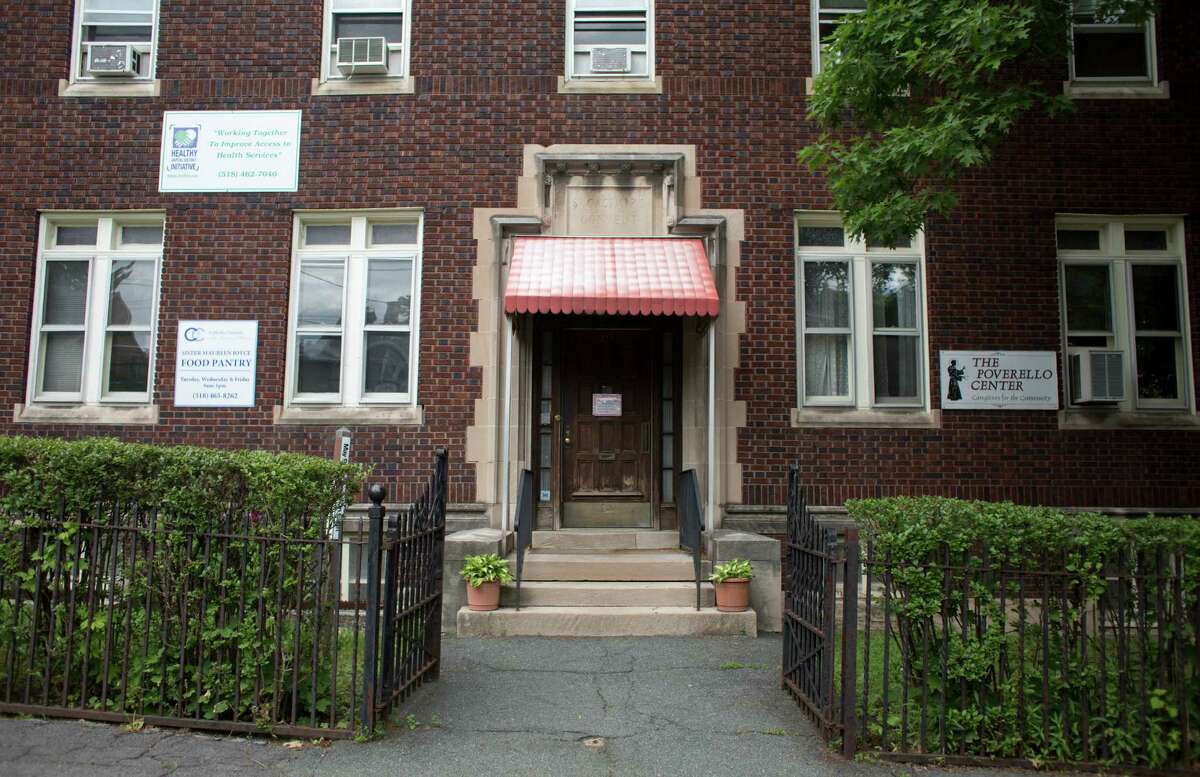
1of5Jon Romano was the victim of a vicious sword attack at the former St. Casimir’s School in Albany’s West Hill neighborhood that is now a homeless drop-in center operated by the Interfaith Partnership for the Homeless. Romano, who was released from prison two years ago and works at the center, remains in critical condition at Albany Medical Center Hospital. Tom Brenner/Special to the Times Union
ALBANY — Jon W. Romano, who has sought redemption for firing a shotgun at students and teachers inside Columbia High School as a teenager in 2004, was the victim in Monday’s vicious attack at a homeless center on Sheridan Avenue in which a man wielding a sword attacked Romano and caused critical injuries to his arms and leg, according to police and court records as well as law enforcement sources.
Romano, 34, remained in critical condition Tuesday at Albany Medical Center Hospital after undergoing surgery in the hours after the attack. A police report indicates Romano’s injuries resulted in a “substantial amount of blood loss” and that responding police officers needed to apply tourniquets above his wounds to stem further bleeding.
The suspect, 42-year-old Randell D. Mason of Albany, was charged with attempted second-degree murder. He was arraigned in Albany City Court on Tuesday morning and sent to Albany County jail without bail. A prosecutor told the judge that Romano remained intubated and that doctors had “reattached” his arms and lower leg but remained concerned about the condition of his leg. He also was struck in the head, according to a police report.
Kristen Giroux, deputy director of Interfaith Partnership for the Homeless, which operates the Sheridan Avenue shelter — called the Community Connections Drop-In Center — told the Times Union on Monday the organization was “bringing in a trauma response team to support our staff and the other guests who were witnesses to this horrific event.”
“It did start with an argument and ended with (Mason) attacking our employee,” Giroux had said. Romano “works throughout the building, manages our clothing pantry and also helps out wherever he’s needed.”
She said the suspect had “used our center previously” and was known to the staff.
According to police reports, Mason allegedly stated, “Yep, I chopped him up — he was disrespecting me.” The report says Mason made that statement “multiple times” while in police custody. Another report, which indicates there is also police body-cam footage, said Mason remarked, “He’s down there all chopped up, said I was racist.”
William Hartl, a former employee of Community Connections said that Romano had worked in the clothing pantry there and was open about his struggles with mental health and had devoted himself to raising awareness on the issues that led to his troubles as a teenager. He said “Romano worked a position in an organization that provides a relatively overlooked service, ensuring that a demographic who has been largely abandoned by the rest of society has the resources they need.”
Hartl said that he left his job at the Interfaith Partnership for the Homeless last year to attend graduate school but returned to visit staff who informed him that Romano had embraced his work for the center and was flourishing in the position.
“You’re dealing with many people who have severe mental health problems with very little resources,” Hartl said. “The staff at IPH show up everyday, potentially putting themselves in danger because they care about the community, most of whom are thankful for the services. John paid a very high price for helping those that have fallen through the cracks and deserves to be viewed as a hero for his sacrifice.”
He added that the guests who come there for services also “are just like everyone else, they have their own struggles to face. Even his attacker needs empathy and compassion because to experience homelessness and poverty … it’s an incredibly difficult and damaging way to live.”
Earlier this year, Romano spoke to law enforcement officials during an event at the Saratoga Casino and Hotel, where he told the audience about the importance of looking out for signs that students are in trouble.
“If we can have them opening up and getting rid of any toxicity that might be building up in them, then hopefully nobody will even come close to doing anything that I have done,” Romano had said, according to a report by NewsChannel 13.
The Saratoga County Sheriff’s Office hosted the three-day conference on school safety, where Romano was a featured speaker.
He was released in late 2020 after spending more than 15 years in prison for attempted murder and other charges connected to the February 2004 shooting at the suburban high school in East Greenbush.
In 2018, Romano wrote a letter to the Times Union in response to a column by Chris Churchill which featured an interview with retired Columbia principal John Sawchuk, who had tackled and disarmed the 16-year-old after Romano had fired the pump-action shotgun twice, missing students but wounding a teacher.
“John Sawchuk is a hero who I owe my life to,” Romano wrote in the letter he sent from Coxsackie Correctional Facility in Greene County. “I know whenever another horrible shooting happens, he and all of my victims are hurt all over again from what I did to them. I want to take away their pain but knowing that I cannot, I want to prevent others from experiencing this pain.”
Romano, who was sentenced to a 17- to 20-year prison term, moved to Albany County after his release.
A parole panel noted that Romano had a low chance of returning to prison and a “positive relationship” with his family.
There was no information disclosed during Tuesday’s arraignment in City Court that indicated Mason suffers any mental health disorders. But Giroux, the deputy director of the Interfaith Center, had said, “We, locally and beyond, have a real mental health crisis that we need to deal with. As an agency it’s been our mission to support people who have been turned away by many other programs and agencies who have no place else to go, and that’s what this center is all about.”
The shelter has been open at that location since 2019, but Interfaith’s drop-in center program has been active for 16 years. The center, which broke ground in 2017 as a $5 million project, also provides apartments for formerly homeless individuals. The center provides food, access to showers and laundry facilities, and other services.